
The Tin That Comes Out Every November
In a lot of Pakistani homes, you can tell winter has arrived without checking the weather. Someone’s mother starts asking whether the badam are fresh. A steel dabba appears on the kitchen shelf. And every morning, before chai, there’s a spoonful of panjeeri waiting.
Nobody really sits down to explain panjeeri to you. You just grow up with it. It’s the thing your nani made in huge batches, the thing that got sent to your phupho’s house when her baby was born, the thing you were told to eat “for strength” when you had exams in December.
But if you’ve never made it yourself, or you’re buying it for the first time for someone else, it helps to know what you’re actually getting.
So What Is Panjeeri, Exactly?
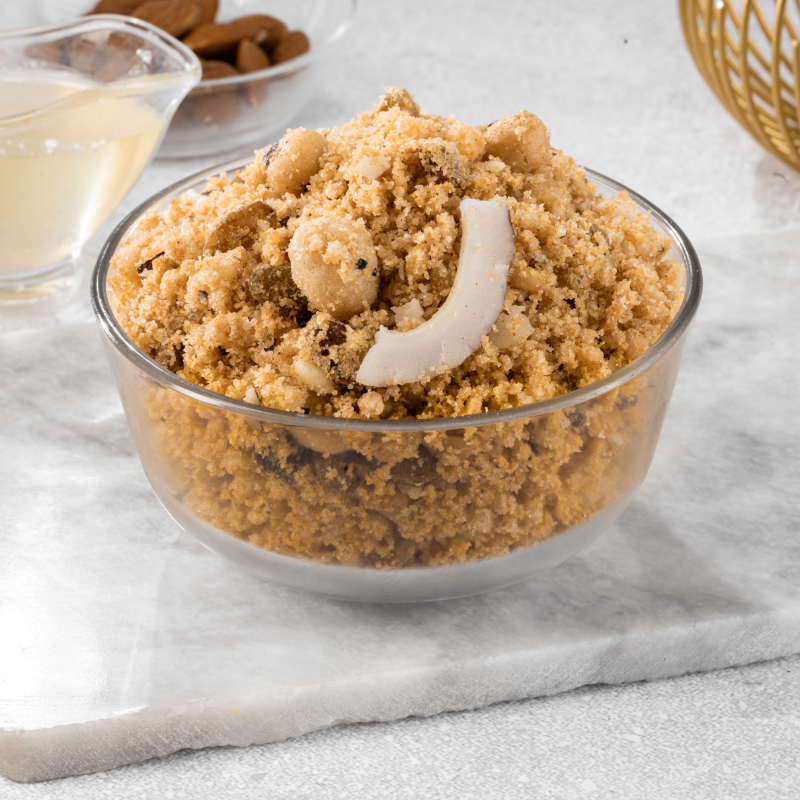
At its simplest, panjeeri is wheat flour roasted slowly in desi ghee until it turns golden and smells nutty, then mixed with sugar and a generous amount of dry fruit. It’s crumbly, not set like halwa or pressed like barfi. You eat it with a spoon, or by the handful if no one’s looking.
The base is almost always the same. What changes from home to home is everything that goes in after:
- Dry fruits like almonds, cashews, pistachios, walnuts and dried coconut
- Makhanay (fox nuts), roasted until crisp
- Gond, an edible gum that’s fried in ghee until it puffs up
- Seeds such as charmagaz (a mix of melon and pumpkin seeds), and in some families saunf or a little ajwain
The roasting is where most homemade batches go wrong. Rush it and the atta tastes raw. Leave it a minute too long and the whole kadhai turns bitter. That’s a big part of why so many families now buy panjeeri instead of spending an entire afternoon stirring.
Why Every New Mother Gets a Box
If there’s one moment panjeeri is tied to, it’s the weeks after a baby is born. In many families, the panjeeri is made (or ordered) before the due date, so it’s ready the day mother and baby come home from the hospital.
The reasoning is old and practical. After delivery, a woman has lost blood, isn’t sleeping, and is often feeding a baby every two hours. She needs food that’s dense, warming and quick to eat with one hand. A few spoons of ghee, wheat and nuts fits that description better than most things in the kitchen.
That said, panjeeri is a traditional food, not a medicine. It’s rich and calorie-heavy, so a couple of spoons a day is how most families serve it. If the new mother has gestational diabetes, a C-section recovery, or any dietary advice from her doctor, it’s worth checking with them first.
It also makes a thoughtful gift. Turning up at a new baby’s house with a box of panjeeri says something a bouquet doesn’t: that you’re thinking about the mother, not just the baby.
How Families Actually Eat It in Winter
Outside of the post-delivery weeks, panjeeri becomes a winter routine. Karachi winters are short and mild, but the habit travelled here with families from Punjab and elsewhere, and it stuck.
The most common way is plain: a spoonful in the morning, with or after chai. Some people warm it for a few seconds before eating, which loosens the ghee and brings the smell back. Others stir a spoon into a glass of hot milk at night, which is how a lot of grandparents prefer it because it’s easier to chew.
Kids usually come round to panjeeri slowly. The ones who like it tend to pick out the cashews first. Mixing a little into their morning dalia or sprinkling it over kheer is an easy way in.
One small tip from every household that buys it in bulk: keep it in an airtight jar, and use a dry spoon. Moisture is what spoils it, not time.
Sugar-Free Panjeeri, for the Ones Who Usually Say No
In most families there’s at least one person, often a parent, who watches everyone else eat panjeeri and quietly passes. Diabetes is common enough in Pakistan that a winter sweet without a sugar-free version leaves someone out.
Sugar-free panjeeri keeps the roasted atta, ghee and dry fruit, and replaces the sugar with a sugar substitute. It tastes close to the original, and for a lot of people that’s the point: they get to eat from the same tin as everyone else.
Be realistic about it, though. Sugar-free doesn’t mean carb-free or light. The flour and ghee are still there, so portions still matter, and anyone managing diabetes should follow their own doctor’s advice on how much is okay.
If you’re shopping for someone who avoids sugar, our guide to sugar-free products at Rehmat-e-Shereen covers the other options too.
What to Check Before You Buy Panjeeri
Ordering panjeeri online saves you the afternoon at the stove, but not all panjeeri is the same. A few things are worth checking before you pay:
- What fat it’s made in. Traditional panjeeri uses desi ghee. Cheaper versions sometimes use vanaspati or oil, which changes the taste and the smell completely.
- How much dry fruit is actually in it. Good panjeeri should look full of nuts, not like sweet flour with a few almond slivers on top.
- Freshness. Ask when it was made. Fresh panjeeri smells of roasted atta and ghee the moment you open the box.
- Weight and price per kg. Compare like with like. A cheaper box is often just a smaller one.
You can order panjeeri online from Rehmat-e-Shereen. If you’re sending it to a new mother or to family in another city, order a few days early in peak winter, when demand goes up.
Once it arrives, transfer it to an airtight container and keep it somewhere cool and dry. There’s no need to refrigerate it.
Frequently Asked Questions
Is it panjeeri or panjiri?
Both. It’s the same sweet, and you’ll see it spelled panjeeri, panjiri and panjeri depending on who’s writing.
How much panjeeri should you eat in a day?
Most families serve one to two tablespoons a day. It’s rich, so a little goes a long way.
When should a new mother start eating panjeeri?
Traditionally, soon after delivery. If she’s had a C-section or has any health condition, check with her doctor first.
Can diabetics eat panjeeri?
Regular panjeeri has a lot of sugar. A sugar-free version is a better option, but it still contains flour and ghee, so portion size matters. Follow your doctor’s advice.
How long does panjeeri stay fresh?
Kept dry in an airtight jar, it lasts for weeks. Check the box for the exact best-before date.
Where can I buy good panjeeri?
Look for one made in desi ghee that doesn’t hold back on the dry fruit. Rehmat-e-Shereen sells panjeeri in its shops and online, including a sugar-free version.
Before the Jar Runs Out
Panjeeri has outlasted a lot of food trends because it was never really about trend. It’s what families make when someone needs looking after, whether that’s a new mother, a parent who feels the cold more each year, or a child heading out on a December morning.
If you don’t have an afternoon to spend roasting atta, we’ve done that part. Next time you’re shopping for sweets in Karachi, add a box of panjeeri to the order, and if someone at home avoids sugar, the sugar-free one too. That way, nobody has to sit this winter out.